
First drilling begins at possible site of Noah's Ark in Türkiye
Targeted core drilling has been reported at the Durupınar formation in eastern Türkiye, a striking ship-shaped structure that, according to published measurements, is approximately 144 to 164 metres long. This brings material from deeper layers of the formation to the surface for further examination.
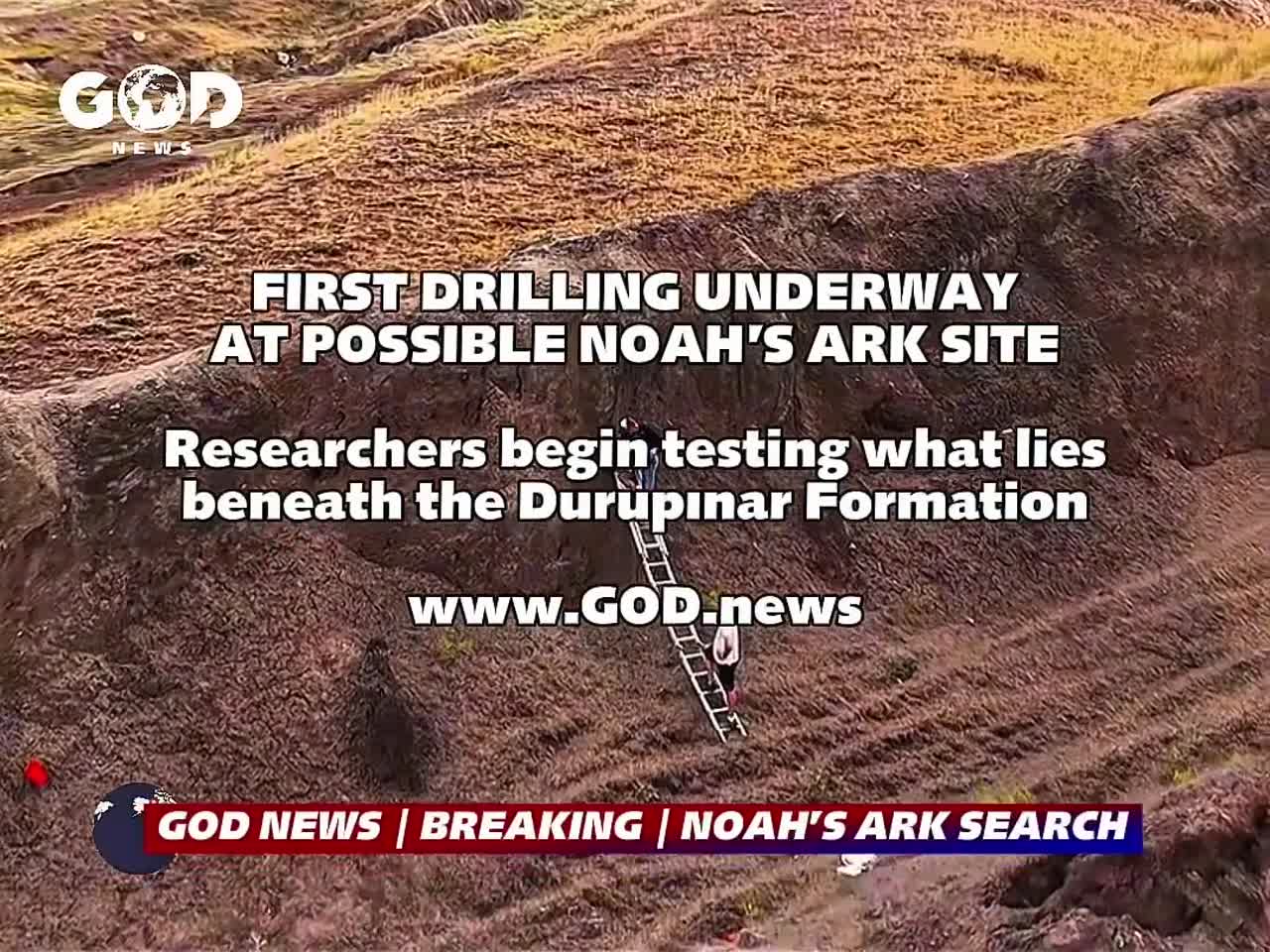
GOD NEWS | TURKEY — 29 September 2026
Research into one of the most discussed possible sites of Noah's Ark has entered a new phase.
Targeted core drilling has been reported at the Durupınar formation in eastern Türkiye, a striking ship-shaped structure that, according to published measurements, is approximately 144 to 164 metres long. This brings material from deeper layers of the formation to the surface for further examination.
Noah's Ark Scans announced on 23 September that its drilling campaign had begun. A separate team led by archaeologist Cenker Atila also reported fieldwork and sampling earlier this season. Public reports do not fully clarify how the two operations relate to each other. GOD News therefore does not present them as one and the same project.
Following earlier ground-penetrating radar surveys, ERT measurements, mapping and soil studies, the research is shifting from geophysical images to tangible material from below the surface.
The Bible speaks of the mountains of Ararat
Genesis describes how the ark came to rest after the flood:
“And the ark rested in the seventh month, on the seventeenth day of the month, upon the mountains of Ararat.” — Genesis 8:4
Notably, Scripture speaks of “the mountains of Ararat” and not specifically of the present-day peak now called Mount Ararat.
The Durupınar formation lies within this broader historical region and has attracted attention for decades because of its shape, dimensions and subsurface anomalies that researchers believe they can see.
That makes the site interesting for further research. It does not, however, mean that Durupınar has been identified as Noah's Ark.
From scans to physical samples
Earlier research phases used Ground-Penetrating Radar (GPR) and Electrical Resistivity Tomography (ERT), among other methods. These can reveal differences beneath the Earth's surface without direct excavation.
According to the research team involved, patterns and possible anomalies were observed. Radar images alone, however, cannot establish what such structures consist of.
The core drilling is therefore an important next step. Drill cores can be examined for mineral and geological composition, sediment layers, organic material, microscopic structures, age and origin, among other things.
This allows researchers to investigate whether anomalies beneath Durupınar can be explained by natural geological processes or whether further archaeological investigation is warranted.
Unidentified hard layer
According to a press release from the project, a drill bit broke at a depth of approximately four to five metres after making contact with a hard layer. Researchers involved cited heavily mineralised material or petrified wood as possible explanations.
Andrew Jones of Noah's Ark Scans emphasised that no material has yet been identified as ancient wood and that its age has not been established. Laboratory results have not yet been published.
A hard layer underground is not in itself evidence of an ancient ship — and therefore not evidence that Noah's Ark has been found.
Geological counterarguments
Several geologists, including Lorence Collins and Eşref Atabey, have previously described Durupınar as a natural geological formation. Creationist geologist Andrew Snelling also rejected its identification as the Ark. Their explanations remain a substantive alternative that new sample analysis will need to test.
What happens now?
The coming period will focus primarily on laboratory analysis of the drilled samples. Researchers want to establish what the material consists of, how old it is and how the layers relate to the surrounding geology.
Those results can then be compared with earlier radar, ERT and soil data.
Until then, one journalistic formulation remains essential: Noah's Ark has not been proven to have been found. Research into a site that some believe may be connected to the biblical account has entered a new phase.
The drilling has begun. The samples are coming to the surface. Now the evidence must be examined.
Trust & Transparency
The Emet Standard →Sources & Documents
No source records have been published for this article yet. Named sources are cited in the text.
Corrections, Clarifications & Updates
No corrections, clarifications or updates recorded for this story.
Related Verified Reports
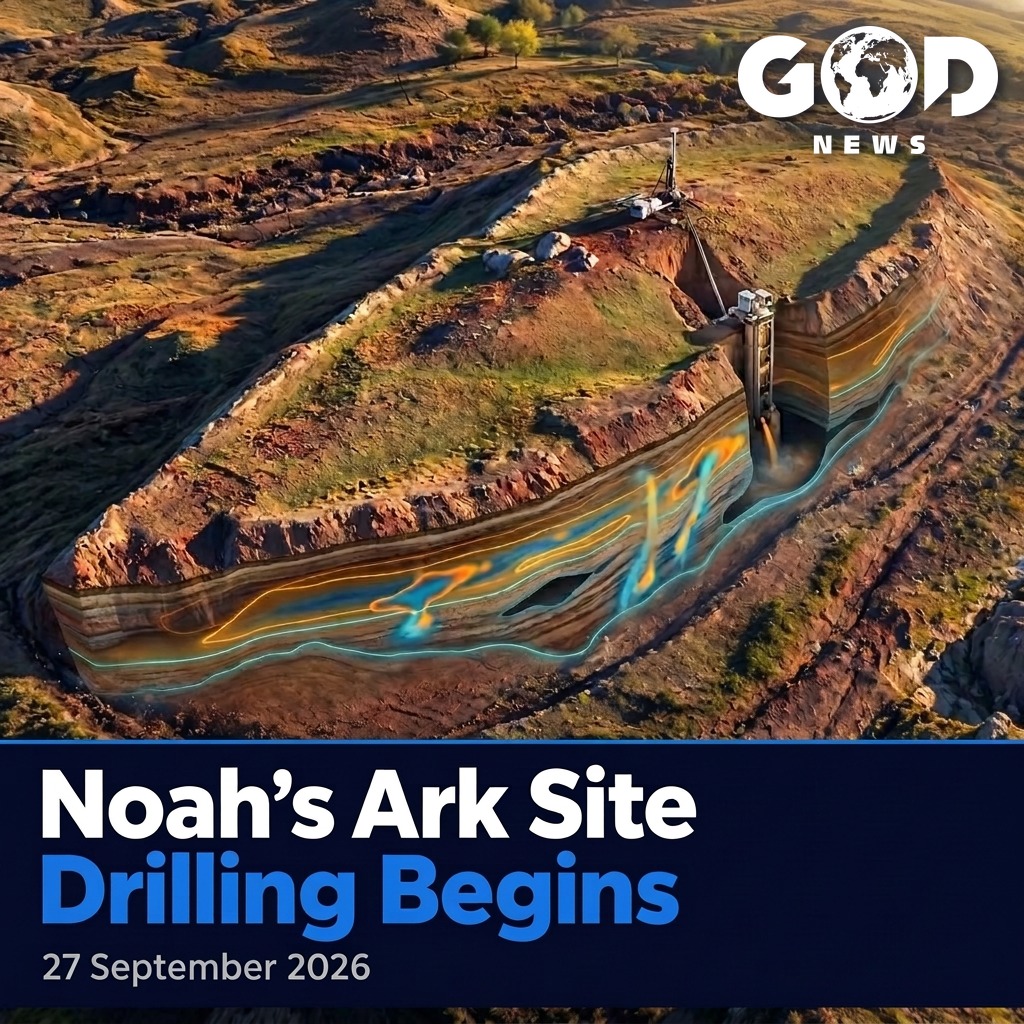
Researchers begin drilling at disputed “Noah's Ark” formation in Türkiye
Researchers have begun deep core drilling at the boat-shaped Durupınar formation in eastern Türkiye, which has been associated with Noah's Ark for decades. The team reports organic material and cavities; independent laboratory results are still lacking.
Palestine: what does the name really tell us?
The name Palestine has a long history. Henk Folkers examines the Roman renaming, the Philistines and the emergence of a modern Palestinian identity.

Jerusalem: Already a Jewish Majority in the Year of Herzl
In 1896, the year Theodor Herzl published "Der Judenstaat", Jerusalem already had a Jewish majority. A walk through the history of the city that all Jews consider their home.
Reader conversation
Comments
Checking your sign-in…
No approved comments yet.