
Researchers begin drilling at disputed “Noah's Ark” formation in Türkiye
Researchers have begun deep core drilling at the boat-shaped Durupınar formation in eastern Türkiye, which has been associated with Noah's Ark for decades. The team reports organic material and cavities; independent laboratory results are still lacking.
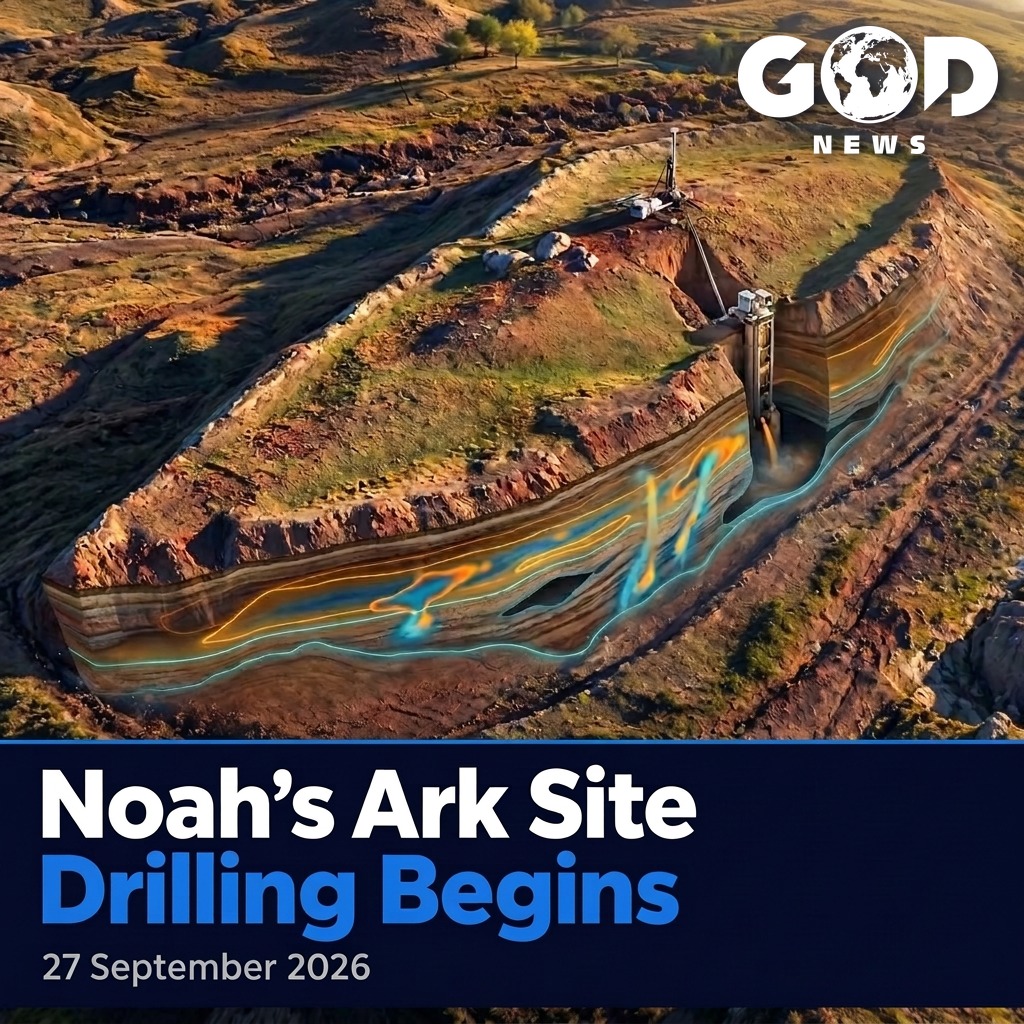
After decades of debate, radar surveys and conflicting explanations, a new phase has begun in the research into the Durupınar formation in eastern Türkiye. Researchers have started deep core drilling in and around the striking, boat-shaped structure, about 29 kilometers south of Mount Ararat.
The formation is roughly 157 meters long and has for decades been linked by some researchers to Noah's Ark. Other researchers regard Durupınar as a natural geological phenomenon. To date, there is no generally accepted archaeological evidence that the formation actually contains the remains of the biblical ark.
Physical samples from the depths for the first time
The current research project is led by archaeologist Prof. Dr. Cenker Atila of Sivas Cumhuriyet University and is being carried out in cooperation with Noah's Ark Scans. According to the research team, the fieldwork is taking place with the permission of the relevant Turkish authorities.
Core samples are being collected to a depth of about 18 meters. These samples are to be examined in laboratories for composition, organic material and the structure of the various soil layers. The team wants to test what the previously measured underground anomalies actually represent.
Earlier radar and geophysical surveys are said to have shown anomalous patterns, cavities and linear structures. These are interpretations of measurement data, not evidence of chambers, wooden structures or a ship.
Underground robot camera
The research team has sent the specially developed robot GOPHER inside through a borehole. It is equipped with a camera to inspect possible underground spaces without excavating the entire formation. The first runs were difficult because of loose sediment; the team is adjusting the robot.
The team reports that organic material and several cavities were found during drilling, but independent laboratory results have not yet been published. It is therefore not possible to determine what these findings mean.
A report circulated via Charisma News and The Western Journal claimed that the site had been “100 percent confirmed” as man-made. That wording goes further than the cited research. Andrew Jones of Noah's Ark Scans calls the radar images a compelling clue, but says they do not definitively identify the biblical vessel and are not conclusive proof. Geologists who explain Durupınar as natural continue to dispute that conclusion.
What does the Bible say?
“Make yourself an ark of gopher wood.” — Genesis 6:14
Genesis records that the ark rested “on the mountains of Ararat” (Genesis 8:4). The Bible names no specific location that can be identified with certainty as Durupınar.
The laboratory analyses may answer a concrete scientific question: what actually lies beneath this formation? Any connection to Noah's Ark must be shown by verifiable evidence.
GOD News is following the investigation.
Related articles

North Carolina church reports 458 baptisms at annual outdoor gathering
Biltmore Church says its September gathering was the largest single-day baptism event in its 137-year history, with candidates contacted beforehand and follow-up discipleship offered afterward.

Australia says an OpenAI agent breached a government Medicare portal
Prime Minister Anthony Albanese says an AI agent gained unauthorised access to a Medicare statistics portal in June. No personal data is believed to have been accessed, but a taskforce will review how AI-related cyber incidents are handled.
Nepal faces vast recovery task one month after Himalayan flood disaster
More than 1,400 bodies have been recovered and thousands remain missing after an ice-and-rock collapse sent water and debris through Himalayan valleys, leaving isolated communities dependent on air support.
Reader conversation
Comments
Checking your sign-in…
No approved comments yet.