
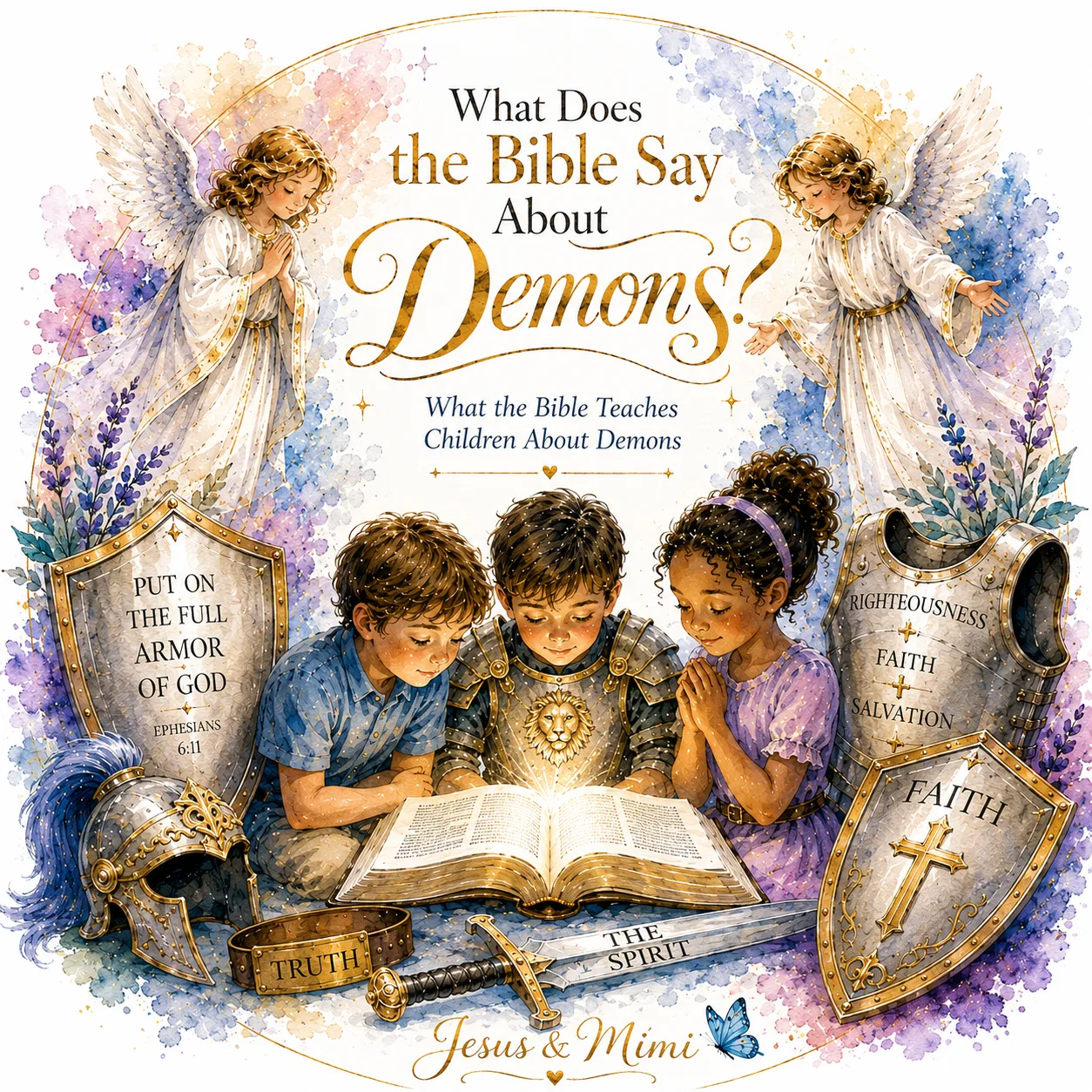
What Does the Bible Say About Demons?
When children encounter demons, spiritual powers, or “demon hunters” through films, games, and stories, how do we explain these things without frightening them? This gentle biblical guide helps parents teach children what Scripture says, how to recognise the difference between en


What Does the Bible Say About Demons?
A simple explanation for children ages 8–12
When Entertainment Introduces Our Children to Spiritual Things
Sometimes a subject enters our children’s world before we ever intended to introduce it.
A film. A series. A game. A character everyone at school seems to know.
And suddenly a child is asking:
“What is a demon?”
That is where we found ourselves recently.
The children had become interested in a film series about demon hunters, and it made me stop and think.
If entertainment is going to introduce our children to words and ideas that actually have a biblical meaning, then surely we should make certain that entertainment is not the one teaching them what those things mean.
Movies can turn demons into funny characters, misunderstood creatures, powerful warriors, companions, heroes, or simply imaginary monsters.
But Scripture does not present them that way.
And yet, especially with young children, I do not believe the answer is to frighten them with the spiritual world either.
Children do not need graphic stories about darkness.
They need truth.
They need wisdom.
And, above everything else, they need to know who Jesus is.
There is a very important difference between teaching a child that evil is real and teaching a child to be afraid of evil.
The Bible acknowledges the reality of spiritual darkness, but it never asks God’s children to become fascinated with it.
Again and again, Scripture turns our attention toward God.
Toward truth.
Toward light.
Toward prayer.
Toward faith.
Toward Jesus.
So when our children begin asking questions about demons, spirits, magic, darkness, or supernatural powers, perhaps we should not immediately silence the conversation.
Perhaps that question is actually an opportunity.
An opportunity to say:
“The movie makes demons into characters for a story. But demons in the Bible aren’t funny fantasy creatures or superheroes. So we don’t want movies to be the place where we learn what spiritual things mean. We learn that from God’s Word.”
And then we can open the Bible together.
The way we explain this to a five-year-old will naturally be different from the way we explain it to an eleven-year-old.
So below are two simple explanations: one for our youngest children, and another for children who are old enough to understand a little more.
Neither is intended to make darkness interesting.
Quite the opposite.
They are intended to help children understand enough truth that darkness loses its fascination — because they know the One who is Light.
Sometimes movies, games, cartoons, and books make demons look mysterious, funny, powerful, exciting, or even like heroes.
But if we want to know what demons really are, we should not learn about them from entertainment.
We should learn from the Bible.
So, what is a demon?
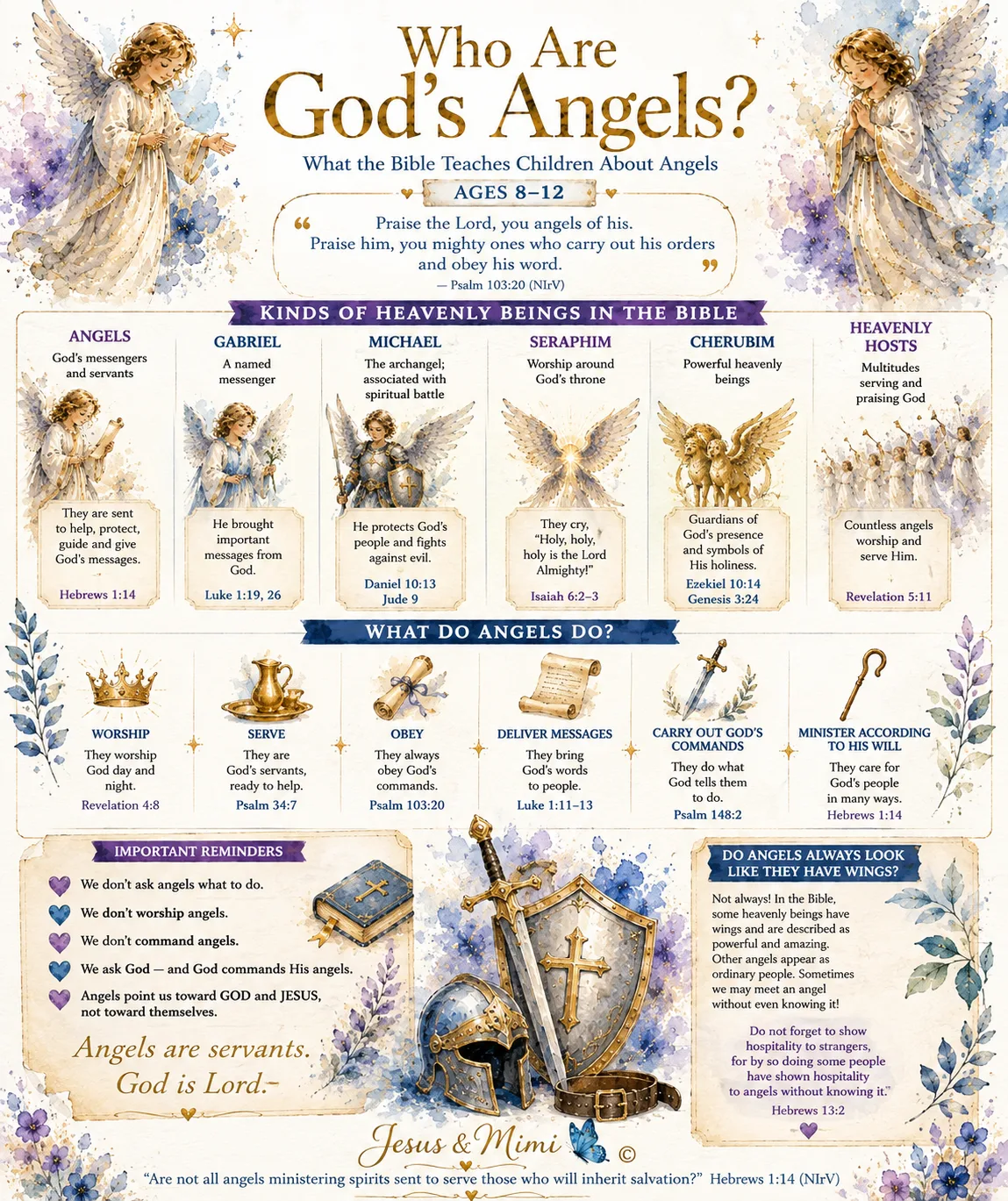
The Bible teaches that God created angels.
Angels were created to serve God and obey Him. But Satan rebelled against God, and other angels followed him in that rebellion. These evil spiritual beings are what the Bible calls demons or evil spirits.
They are not creatures we should admire, copy, celebrate, or become fascinated with.
They are against God and against His truth.
But there is something very important to remember:
Demons are not equal to God.
There is not one powerful “good side” and another equally powerful “evil side.”
God is the Creator.
Satan and demons are created beings.
And Jesus is Lord over all.
Look at what happened when Jesus met demons
When Jesus walked on earth, He sometimes met people who were troubled by evil spirits.
And something becomes very clear when we read those stories:
The demons were afraid of Jesus. Jesus was never afraid of them.
Jesus did not have to struggle to prove that He was stronger.
He simply commanded them, and they had to obey Him.
That tells us something wonderful about Jesus:
He has authority.
He is greater than every power of darkness.
So Christians do not need to become obsessed with demons or spend their time thinking about them.
Our eyes belong on Jesus.
Why should we be careful what we watch?
Something can be imaginary and still influence the way we think.
A movie may say:
“It’s only a character.”
“That demon is actually funny.”
“This one is one of the good guys.”
“Using dark powers is cool as long as you use them for good.”
But as Christians, we learn to ask a different question:
Does this help me love what God loves?
The Bible says:
“Whatever is true, whatever is honorable, whatever is just, whatever is pure, whatever is lovely… think about these things.”Philippians 4:8
That does not mean every story has to be about church or the Bible.
Christians can enjoy adventure, fantasy, superheroes, funny stories, mysteries, and imagination.
But we should learn to notice when something begins making darkness look attractive, harmless, exciting, or good.
That is called discernment.
Discernment means learning to recognize the difference between what looks good and what actually agrees with God’s truth.
What about “demon hunters”?
Stories about hunting demons may seem exciting because they involve battles between good and evil.
But the Bible does not tell Christians to become demon hunters.
The Christian life is not about chasing darkness.
It is about following Jesus.
Ephesians 6 teaches us that there really is a spiritual battle, but notice what God gives His children:
truth,
righteousness,
faith,
salvation,
the Word of God,
and prayer.
That is called the armor of God.
God does not tell us to become fascinated with evil.
He teaches us to stand close to Him.
And we do not have to be frightened
Sometimes children hear about demons and immediately become afraid.
But fear is not the lesson God wants us to learn.
The lesson is:
Jesus is greater.
We do not need to investigate demons.
We do not need to experiment with spiritual darkness.
We do not need to watch frightening things to prove that we are brave.
We simply belong to Jesus and choose what is good.
When something makes you uncomfortable, confused, frightened, or curious about dark spiritual things, talk to your parents or another trusted Christian adult.
You never have to explore those things by yourself.
Five things to remember
• God created everything, including angels.
• Satan and demons rebelled against God.
• Demons are not good spirits or misunderstood heroes.
• Jesus has authority over every evil spiritual power.
• Christians do not chase darkness. We follow Jesus.
And perhaps the most important sentence of all:
We do not need to know everything about darkness to walk in the Light. We need to know Jesus.
Keep Their Eyes on the Light
Perhaps the most important thing we can teach our children about darkness is that darkness is not the centre of the story.
Jesus is.
We do not need to raise children who know everything there is to know about demons.
We want to raise children who know Jesus.
Children who know His voice.
Children who know His Word.
Children who understand that not everything presented as harmless entertainment is necessarily something we should invite into our minds and hearts.
And children who also know that they never need to live afraid.
There is a great difference between fear and discernment.
Fear says:
“What if something evil gets me?”
Discernment says:
“I belong to Jesus, so I can choose what I allow into my heart and mind.”
That is what I want our children to learn.
Not fear of darkness.
But love for the Light.
Not fascination with evil.
But fascination with Jesus.
Not a childhood filled with anxiety about spiritual things.
But a childhood in which they know where to go when something confuses them:
to Mum and Dad, to trusted believers, and most importantly, to the Word of God.
There will always be another film, another game, another trend, another character, another story.
We cannot possibly stand beside our children every moment of their lives and remove everything questionable before they encounter it.
But we can give them something far more valuable.
We can teach them how to discern.
We can teach them to ask:
Is this true?
Does this agree with God’s Word?
What is this teaching me to admire?
Is it making something God calls darkness look attractive or harmless?
Would this help me keep my thoughts on what is good, pure, lovely, and true?
And perhaps, as they grow older, those questions will become part of the way they naturally walk with God.
Philippians 4:8 gives us such a beautiful guide:
“Whatever is true, whatever is noble, whatever is right, whatever is pure, whatever is lovely, whatever is admirable… think about such things.”
And Jesus Himself gives us the safest place to finish:
“I am the light of the world. Whoever follows Me will never walk in darkness, but will have the light of life.” John 8:12
That is what I want our children to remember long after they have forgotten the name of the movie.
We do not have to study darkness in order to recognize the Light.
We learn God’s Word.
We stay close to Jesus.
We teach our children to recognize His truth.
And when the world makes darkness look fascinating, powerful, beautiful, funny, or harmless, we gently turn their little faces back toward Him.
Because ultimately this is not a lesson about demons.
It is a lesson about knowing Jesus well enough to recognize what does not belong to Him.
Jesus & Mimi 🦋
We began by asking what the Bible says about darkness. But we will not finish by looking at darkness. We finish with our eyes on Jesus—the Lamb who is worthy, the King who reigns, and the Light darkness cannot overcome.❤️🦋
Song choice.
Yes, spiritual darkness is real. But God Almighty reigns. Jesus came into our darkness. Jesus gave Himself for us. Jesus conquered death. We belong to Him. So our attention belongs on the Lamb—not on darkness.
Images from this article
Trust & Transparency
The Emet Standard →Corrections, Clarifications & Updates
No corrections, clarifications or updates recorded for this story.
Related articles
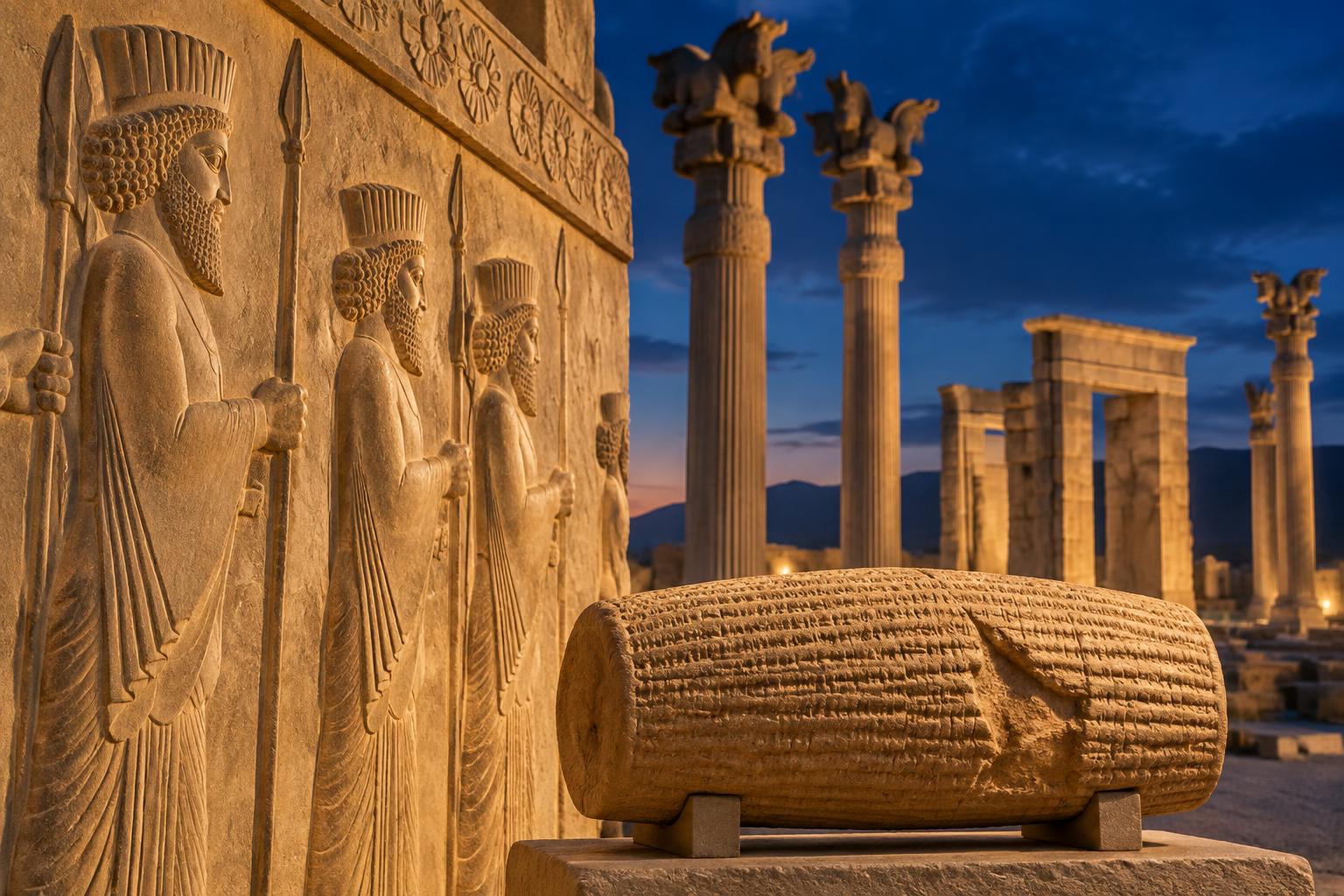
Iran in the Bible: what Scripture actually says about Persia
Iran is not named in the Bible, but the land is. Persia, Elam and Media run through Isaiah, Ezra, Esther, Daniel and Ezekiel — and the way those texts are read still shapes how Christians talk about Iran today.
What Is a Demon?
What Is a Demon? When Entertainment Introduces Our Children to Spiritual Things For ages 5-7 Sometimes a subject enters our children’s world before we ever intended to introduce it. A film.A series.A game.A character everyone at school seems to know. And suddenly a child is askin
When “I” Sits on the Throne
When “I” Sits on the Throne Pharaoh, Pride, and the Cost of Getting My Own Way Last week I, we were laughing about frogs. Thousands upon thousands of frogs. Frogs in the houses.Frogs in the bedrooms.Frogs in the ovens.Frogs everywhere. And then Moses asked Pharaoh when he wanted
Reader conversation
Comments
Checking your sign-in…
No approved comments yet.