
Faith · FAITH
The strategies of the enemy — standing firm in Christ's victory.
Our struggle is not against flesh and blood: about the tactics of the enemy and standing firm in Christ.
7 October 2026 at 15:29 GMT+3 · 10 min read · Jerusalem (IDT)

The Perspective
> “Submit yourselves, then, to God. Resist the devil, and he will flee from you.” — James 4:7
The Bible shows that there is a real spiritual battle going on between the Kingdom of God and the kingdom of darkness. Through Jesus Christ, believers have been transferred from the dominion of darkness and brought into the Kingdom of God’s beloved Son.
> “He has delivered us from the power of darkness and conveyed us into the kingdom of the Son of His love.” — Colossians 1:13
Satan is not a symbol or an impersonal force. He is a real adversary who leads spiritual forces of evil. Our struggle is therefore not primarily against people. People should never become our enemy, no matter how serious a conflict or injustice may be.
> “For we do not wrestle against flesh and blood, but against principalities, against powers, against the rulers of the darkness of this age, against spiritual hosts of wickedness in the heavenly places.” — Ephesians 6:12
At the same time, we do not need to be afraid. Jesus Christ achieved a complete and decisive victory on the cross. He disarmed the powers and made a public spectacle of them.
Christ has won the victory. Our responsibility is to apply and maintain that victory through faith, obedience, and the use of spiritual weapons.
The question is therefore not only whether the enemy attacks, but also how we recognize his strategies and stand firm in Christ.
1. He sows doubt about God's Word
The serpent's first attack in the Garden of Eden was aimed at the reliability of God's Word: “Has God indeed said…?” (Genesis 3:1).
The enemy tries to sow doubt about God's character, His promises, and His commands. When someone questions God's Word, space is created for deception and disobedience.
Jesus resisted the tempter not with human reasoning, but with the words: “It is written.” Knowing Scripture is therefore not a minor matter. God's Word is the sword of the Spirit.
> Our answer: know the Word, believe the Word, speak the Word, and obey the Word.
Bible references: Genesis 3:1-5; Matthew 4:1-11; John 8:44; Ephesians 6:17.
2. He tries to undermine your faith
Fear, doubt, and discouragement are fiery darts with which the enemy tries to weaken our trust in God. He wants us to see our circumstances as greater than God's promises. But faith does not only look at what is visible. Faith trusts in the character and Word of God.
> “Above all, taking the shield of faith with which you will be able to quench all the fiery darts of the wicked one.” — Ephesians 6:16
Faith is not positive thinking. It is a firm trust in what God has spoken.
> Our answer: refocus your heart on God's faithfulness and speak His promises against fear, doubt, and unbelief.
Bible references: Ephesians 6:16; Hebrews 11:1,6; Romans 10:17.
3. He attacks your identity in Christ
The enemy wants you to continue judging yourself by your past, your rejection, your mistakes, or what others have said about you. However, God determines who you are.
Through Jesus' sacrifice, when you are in Christ, you are:
- redeemed
- forgiven
- cleansed
- justified
- sanctified
- adopted as a child of God
Your identity does not rest on your feelings, but on the finished work of Christ.
> “Therefore, if anyone is in Christ, he is a new creation.” — 2 Corinthians 5:17
> Our answer: align your confession with God's Word. Declare what the blood of Jesus has accomplished for you.
Bible references: Romans 5:1; 8:1,15-17; Ephesians 1:3-7; 1 Corinthians 6:11.
4. He constantly accuses
The devil is called the accuser of the brethren in the Bible. He tries to trap people in guilt, shame, and condemnation. Here, an important distinction is needed.
The Holy Spirit convicts specifically of sin, so that we repent, receive forgiveness, and are restored. The enemy accuses to keep us in condemnation without hope.
When we sincerely confess our sins, God is faithful and just to forgive us and cleanse us.
> “And they overcame him by the blood of the Lamb and by the word of their testimony.” — Revelation 12:11
> Our answer: confess known sin, receive God's forgiveness, and then reject every accusation that is contrary to the Word of God.
Bible references: Romans 8:1,33-34; 1 John 1:9; Revelation 12:10-11.
5. He uses fear and intimidation
Fear is not just an emotion. It can control, torment, and paralyze people. The enemy uses intimidation to deter us from obedience.
Fear says: “What will happen?” Faith says: “God is faithful.”
> “For God has not given us a spirit of fear, but of power and of love and of a sound mind.” — 2 Timothy 1:7
This does not mean that every form of fear is automatically demonic. But where fear controls and holds us captive, we must submit to God and resist.
> Our answer: acknowledge no other dominion than that of Jesus Christ. Choose faith, obedience, and trust in God.
Bible references: Psalm 27:1; Isaiah 41:10; 2 Timothy 1:7; 1 John 4:18.
6. He deceives
Deception is one of the enemy's most powerful weapons. He often presents lies as truth and darkness as light.
> “And no wonder, for Satan himself transforms himself into an angel of light.” — 2 Corinthians 11:14
Not every spiritual experience, prophecy, dream, impression, or teaching automatically comes from God. Everything must be tested against Scripture and against the fruit it produces.
> Our answer: test the spirits, examine the Scriptures, and let God's Word be the highest authority.
Bible references: Deuteronomy 13:1-4; Acts 17:11; 1 John 4:1; 1 Thessalonians 5:21.
7. He tempts to sin and impurity
Temptation usually presents sin as attractive, innocent, or manageable. But the ultimate goal is slavery, separation from God, and destruction.
However, we should not shift all responsibility onto the devil. The Bible also teaches that one is tempted when by his own desire he is drawn away. Therefore, deliverance never replaces repentance, obedience, and self-control.
> “Walk in the Spirit, and you shall not fulfill the lust of the flesh.” — Galatians 5:16
> Our answer: confess sin, turn away from it, break every conscious connection with evil, and flee from temptation.
Bible references: James 1:13-15; 4:7; 1 Corinthians 6:18; 10:13; Galatians 5:16.
8. He sows division
The enemy seeks division in marriages, families, churches, and friendships. He uses pride, suspicion, gossip, bitterness, and unforgiveness.
Yet, people are not our real enemies. We may name injustice and set healthy boundaries, but we must refuse to be controlled by hatred, bitterness, or revenge.
> “endeavoring to keep the unity of the Spirit in the bond of peace.” — Ephesians 4:3
Unity does not mean that truth or justice are sacrificed. Biblical unity exists in truth, love, humility, and obedience to Christ.
> Our answer: walk in truth, forgive, guard your heart, and refuse to participate in gossip, manipulation, and division.
Bible references: John 17:20-23; Ephesians 4:1-6,26-32; Hebrews 12:15.
9. He tries to keep people bound
The enemy wants to keep people captive in sin, lies, addiction, bitterness, fear, occultism, and other forms of spiritual slavery.
According to the Bible, demonic powers are real spiritual beings. They can tempt, oppress, and keep people bound. But Jesus Christ came to destroy the works of the devil.
> “Therefore if the Son makes you free, you shall be free indeed.” — John 8:36
Real freedom does not come from a one-time experience alone. It requires repentance, breaking with sin, rejecting lies, and continuous submission to Jesus.
> Our answer: confess Christ as Lord, renounce every occult or sinful connection, and seek prayer and reliable spiritual guidance where necessary.
Bible references: Luke 4:18; John 8:31-36; Acts 19:18-20; 1 John 3:8.
10. He tries to hinder God's calling
The enemy tries to block God's destiny for your life through distraction, discouragement, fear, disobedience, or compromise.
However, not every personal desire is automatically a calling from God. God's guidance must always be tested against His Word and sought in prayer, wisdom, and obedience. When God calls, He also gives grace to persevere.
> “He who has begun a good work in you will complete it until the day of Jesus Christ.” — Philippians 1:6
> Our answer: remain faithful in small things, obey what God has already made clear, and do not let opposition turn you away from His path.
Bible references: Ephesians 2:10; Philippians 1:6; 2 Timothy 4:7-8.
The spiritual weapons God gives us
We do not overcome by human strength, manipulation, or fighting against people. Our weapons are spiritual and mighty through God.
The whole armor of God
Paul mentions:
- the belt of truth
- the breastplate of righteousness
- the readiness of the Gospel of peace
- the shield of faith
- the helmet of salvation
- the sword of the Spirit, which is the Word of God
- persistent prayer
The armor is not a magic formula that we thoughtlessly recite. It describes a life rooted in truth, righteousness, faith, the Gospel, God's Word, and prayer.
Bible reference: Ephesians 6:10-18.
The Word of God
Jesus resisted the devil with the written Word. We too must know, believe, and correctly apply the Scripture.
The blood of Jesus
The blood of Jesus is the basis of our redemption, forgiveness, cleansing, and access to God. We overcome the accuser by the blood of the Lamb and by the word of our testimony. This means that we personally agree with what God's Word says the blood of Jesus has done for us.
The Name and authority of Jesus
Jesus gave His disciples authority over the power of the enemy. This authority is never independent of Christ. It functions only when we submit ourselves to God and act in accordance with His Word. The authority of the believer is no reason for pride. All power and victory belong to Jesus.
Bible references: Luke 10:19-20; Philippians 2:9-11; James 4:7.
Prayer, fasting, and praise
Prayer keeps us dependent on God. Fasting can help us humble ourselves, focus our hearts on God, and seek spiritual breakthrough. Praise directs our attention away from circumstances and toward God's greatness. These means are not techniques to control God. They are expressions of faith, dependence, and surrender.
Bible references: 2 Chronicles 20:20-22; Matthew 6:16-18; Acts 13:2-3; Philippians 4:6-7.
The necessary condition: submission to God
We cannot truly resist the devil while consciously living in disobedience. James first says: “Submit yourselves, then, to God.” Then follows: “Resist the devil.” The order is essential.
Spiritual authority does not come from volume, self-confidence, or formulas. It flows from a life that is under the authority of Jesus Christ. Therefore, repentance, forgiveness, obedience, and sanctification are at the heart of spiritual victory.
Our victory lies entirely in Jesus Christ
The Bible does not call us to be obsessed with the devil. Our eyes must remain fixed on Jesus.
- We overcome not by fear, but by faith.
- Not by our own strength, but by the Holy Spirit.
- Not by human wisdom, but by God's Word.
- Not by fighting people, but by standing firm against spiritual powers.
Christ has won the victory. We may apply that victory through faith, obedience, and perseverance.
> “Put on the whole armor of God, that you may be able to stand against the wiles of the devil.” — Ephesians 6:11
In conclusion
Whatever strategy the enemy uses against you today, remember this:
- Jesus Christ has overcome.
- His blood has paid.
- His Word is truth.
- His Name is above every name.
- His Spirit dwells in His children.
- And His victory is complete.
Therefore, do not keep looking at the enemy, but at Jesus. Submit to God, renounce all sin and lies, take up your spiritual weapons, and keep standing firm.
> “But thanks be to God, who gives us the victory through our Lord Jesus Christ.” — 1 Corinthians 15:57
Trust & Transparency
The Emet Standard →Corrections, Clarifications & Updates
No corrections, clarifications or updates recorded for this story.
Spotted an error? Corrections & Updates →

About the author
Bas Emons
Bas Emons is the founder of GOD Media Network and GOD Radio. A broadcast executive and media entrepreneur with over two decades of experience building and directing major commercial radio stations, he recognized a critical void in today’s media landscape: the lack of news reporting that pairs uncompromising journalistic integrity with a deep, faithful understanding of Scripture. With GOD News, he bridges high-level broadcast discipline with a commitment to verified truth, regional context, and an enduring Kingdom perspective.
View profile →Reader conversation
Comments
Checking your sign-in…
Read next

The Value of Our Soul
This sermon emphasizes the immeasurable worth of the human soul, teaching that it is worth more than the whole world and warning against neglecting it through worldly ambition, sin, or unbelief. It points to Christ’s suffering, death, and resurrection as the price paid for souls and urges believers to value both their own soul and the souls of others.
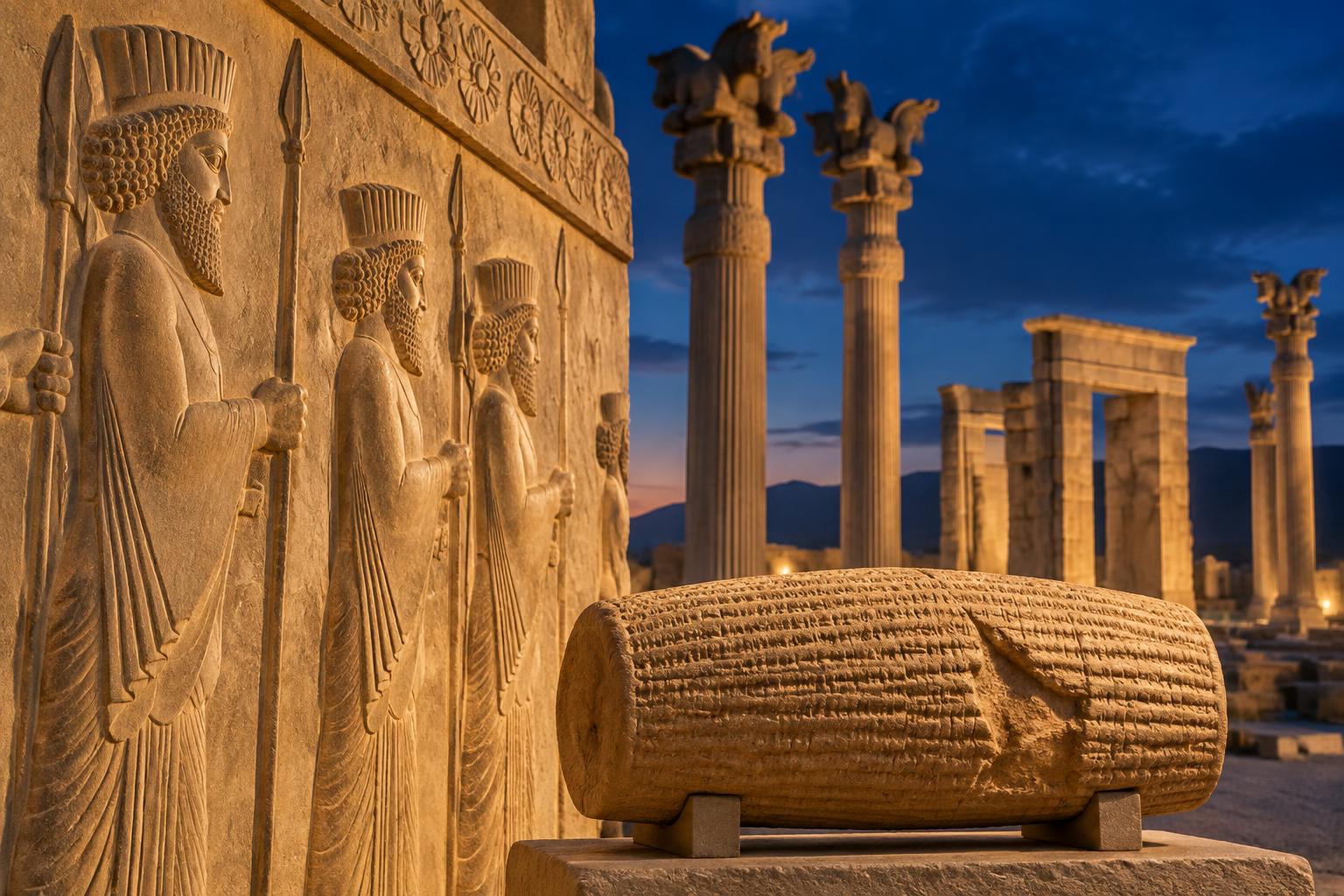
Iran in the Bible: what Scripture actually says about Persia
Iran is not named in the Bible, but the land is. Persia, Elam and Media run through Isaiah, Ezra, Esther, Daniel and Ezekiel — and the way those texts are read still shapes how Christians talk about Iran today.

Student-athletes lead University of Toledo gathering where about 50 are baptised
Nearly 400 people attended an athlete-led worship night at the university’s training centre, organisers said. Participants received Bibles and connections to local churches after the baptisms.
No approved comments yet.