
Algae disruption tests Israel’s water system as scientists examine causes
An exceptional cyanobacteria bloom forced widespread disruption at Mediterranean desalination plants. Israel kept household supplies stable, while researchers debated whether warm seas, nutrients and damaged wastewater systems contributed.
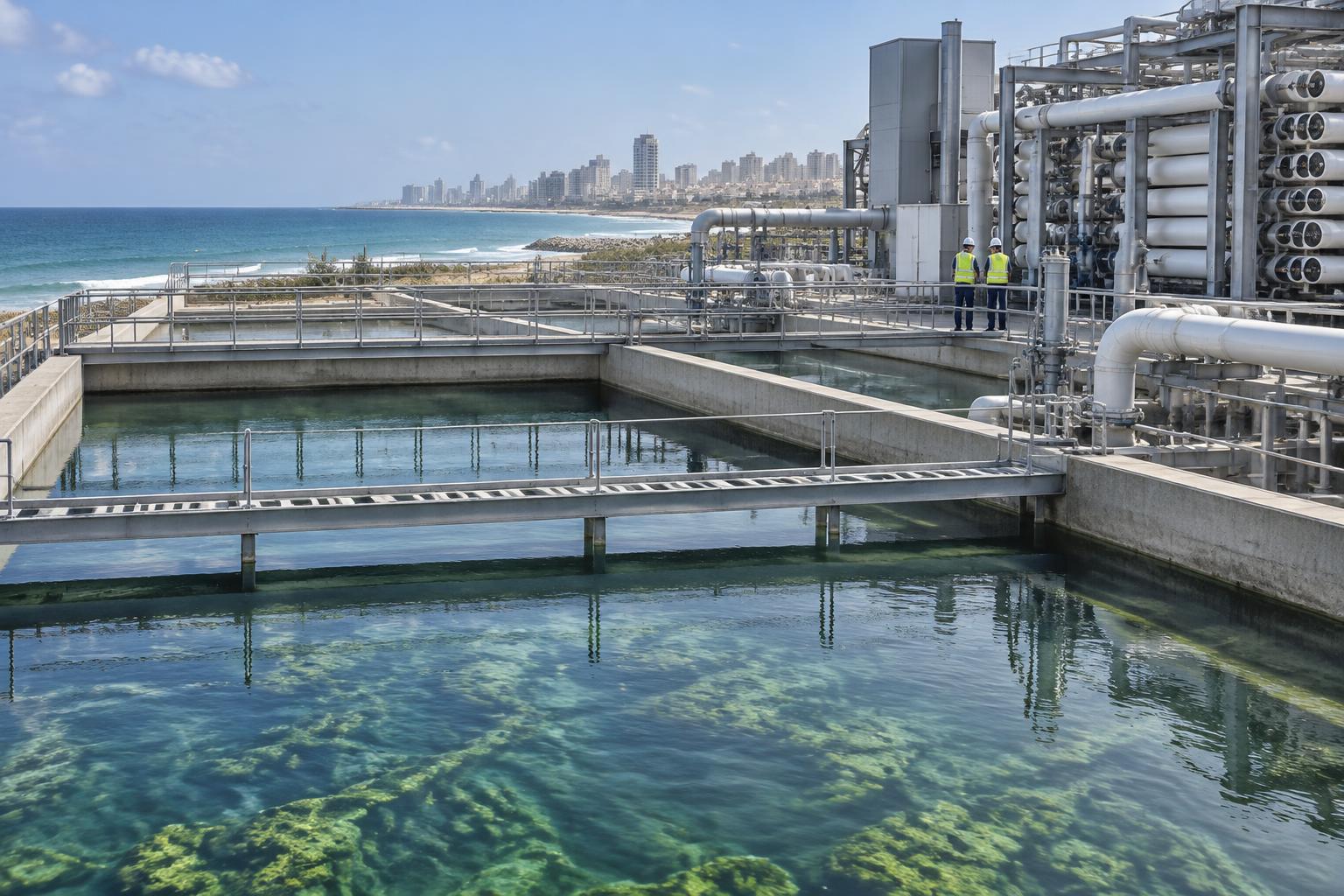
An exceptional bloom of microscopic organisms has disrupted much of Israel’s Mediterranean desalination capacity, exposing the dependence of households and agriculture on a small number of coastal facilities.
Five of Israel’s six large Mediterranean desalination plants were temporarily shut or reduced after unusually turbid seawater threatened filters and intake systems. Hadera remained the only major plant operating normally during the height of the disruption. Authorities compensated with water from the Sea of Galilee, wells and reservoirs and said domestic supplies remained stable.
Researchers identified the organism as a cyanobacterium from the Synechococcus genus. Israel Oceanographic and Limnological Research described the bloom as unprecedented in the country, but scientists had not established one definitive cause at the time of reporting.
Several factors are under examination. Warm water, strong sunlight and high concentrations of nutrients can support rapid growth. Untreated wastewater entering the Mediterranean from Gaza’s war-damaged sanitation system may have contributed nutrients. Similar disruption near El-Arish in Egypt, however, complicates any attempt to attribute the bloom to one source. Climate conditions, regional currents and other pollution may also have played a role.
The distinction matters. A plausible scientific hypothesis is not the same as a proven cause. Reporting should therefore avoid stating that Gaza wastewater caused the shutdowns unless a completed scientific assessment supports that conclusion.
The crisis also crossed political boundaries. Israeli communities faced restrictions and concerns over supply resilience, while civilians in Gaza continued to endure severe shortages and damage to water and sanitation infrastructure. Environmental systems do not stop at borders; decisions affecting wastewater, coastlines and public health can create consequences for neighbouring populations.
ANALYSIS
Israel’s extensive desalination network has provided resilience in a dry region, but concentrated infrastructure can also create shared points of failure. A credible response requires transparent publication of monitoring data, investment in backup capacity and cooperation on wastewater treatment. It also requires care with causation: environmental accountability is strongest when it rests on evidence rather than political convenience.
GOD News asked what is known, what remains disputed and who bears the human cost. The known fact is the bloom and resulting disruption. The precise combination of causes remains under investigation.
Reader conversation
Comments
Checking your sign-in…
No approved comments yet.